

Jones Junction - Does the Telluride Hybrid Need to Be Plugged In Around White Marsh, MD?
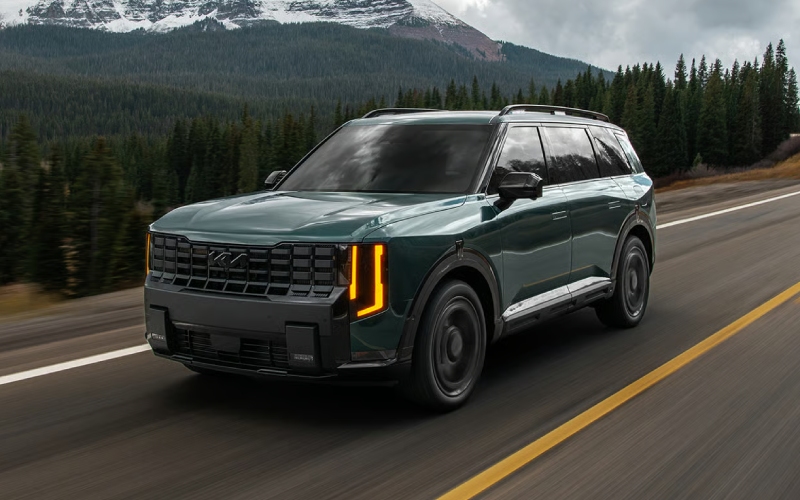
The Telluride Hybrid is designed for shoppers who want the benefits of hybrid driving without adding a charging routine to daily life. For many families and commuters comparing three-row SUVs, that is a meaningful advantage. Kia states that the hybrid battery system recharges automatically through energy captured during braking, so there is no need to plug the vehicle in. You drive it much like a traditional gas SUV, but the hybrid system works in the background to support efficiency, smooth acceleration, and long-range flexibility.
This matters because many in-market shoppers like the idea of hybrid technology but do not want to plan around home charging, public charging stations, or battery charge levels before leaving the house. The Telluride Hybrid offers a more familiar approach. Fuel up, buckle in, and let the turbocharged 2.5-liter hybrid powertrain manage the balance between engine power and electric assist. For drivers serving White Marsh, Abingdon, and Rosedale, that simplicity can be especially useful for commutes, school routines, errands, and longer weekend drives.
How the No-Plug Hybrid System Works
A traditional hybrid uses both a gas engine and an electric motor, but it does not rely on an external charging cable. In the Telluride Hybrid, energy generated during braking helps recharge the hybrid battery system automatically. This process is often called regenerative braking, and it allows the vehicle to reuse energy that would otherwise be lost during deceleration. The result is a driving experience that feels natural while giving the powertrain another source of support.
Kia pairs this hybrid setup with a turbocharged 2.5-liter engine, producing 329 hp and 339 lb.-ft. of torque. That combination is important because this is not a compact commuter car; it is a three-row SUV built for passengers, cargo, and everyday versatility. The electric motor can help with smooth, swift acceleration, while the gas engine provides the sustained power drivers expect from a larger SUV. The transition between power sources is designed to happen automatically, so drivers do not need to micromanage the system.
Why This Matters for Three-Row SUV Shoppers
Hybrid shoppers often ask whether the added technology will make ownership more complicated. With the Telluride Hybrid, Kia emphasizes simplicity. Routine maintenance is similar to a gas vehicle, and a local Kia dealer can handle hybrid-specific diagnostics when needed. That makes the vehicle approachable for families who may be buying a hybrid for the first time.
There is also a packaging benefit. Kia notes that its hybrid batteries are designed and positioned to maintain ample room for passengers and cargo. In a three-row SUV, that detail matters. Owners still need useful space for groceries, sports bags, luggage, child seats, work items, and passengers. The Telluride Hybrid supports that need with seating for up to 7 passengers, tilt-and-slide 2nd-row seats, USB-C outlets in all 3 rows, and a 115V outlet in the cargo area.
What Drivers Should Know Before Choosing a Hybrid SUV
If you are comparing the Telluride Hybrid with gas-only SUVs or plug-in vehicles, it helps to understand the ownership differences. A no-plug hybrid can be a strong fit for drivers who want improved fuel efficiency and responsive acceleration without installing charging equipment or changing routines. It can also be a smart match for households that park outside, share vehicles among family members, or have unpredictable schedules.
- No charging routine: The hybrid battery system recharges automatically through braking, so external charging is not required.
- Familiar fueling: Drivers continue to use gas, which keeps long-distance travel and daily errands simple.
- Responsive power: The electric motor works with the turbocharged engine to support smooth acceleration.
- Passenger-first design: Kia positions the hybrid battery system to help preserve usable cabin and cargo space.
- Simple maintenance approach: Routine maintenance is similar to a gas vehicle, with hybrid diagnostics handled by trained Kia service professionals.
Those advantages make the Telluride Hybrid appealing for shoppers who want advanced engineering but prefer an easy learning curve. Instead of thinking about where to charge, the focus stays on what the SUV can do: carry passengers comfortably, support everyday driving, and provide confident power when needed.
How to Evaluate the Telluride Hybrid on a Test Drive
A test drive is the best way to understand how natural the no-plug hybrid system feels. Start in stop-and-go traffic if possible, because that is where low-speed smoothness and braking feel are easiest to notice. Then move to a faster road to evaluate acceleration, passing response, and cabin quietness. The turbo-hybrid powertrain should feel confident and composed, not overly busy or unfamiliar.
It is also worth exploring the technology and family-focused layout during the visit. The available digital cockpit offers 29.6 in. of total combined digital displays with Wireless Apple CarPlay® and Wireless Android Auto™ compatibility. Available driver-assistance features such as Blind-Spot View Monitor, 360° Surround View Monitor, Full Display Mirror®, Highway Driving Assist 2, and Navigation-Based Smart Cruise Control w/ Stop & Go - Curve can help make daily driving feel more supported.
- Check low-speed smoothness: Pay attention to acceleration from a stop and braking feel in traffic.
- Test highway confidence: Evaluate merging, passing, and how the powertrain responds at higher speeds.
- Explore the cabin: Test 2nd-row access, 3rd-row comfort, USB-C outlet placement, and cargo flexibility.
- Use available cameras: Try the available 360° Surround View Monitor and Blind-Spot View Monitor in a parking area.
- Ask service questions: Review hybrid maintenance, warranty coverage, and ownership benefits before deciding.
At Jones Junction, our team can walk through these points during a vehicle demonstration so shoppers understand the hybrid system, cabin technology, and trim differences before making a decision. A focused test drive can quickly show whether the Telluride Hybrid fits your driving habits and comfort expectations.
Frequently Asked Questions:
Does the Telluride Hybrid need a home charger?
No. The Telluride Hybrid does not require a home charger because it is not a plug-in hybrid. The battery system recharges automatically through braking, which helps keep daily ownership simple.
Is the Telluride Hybrid still powerful enough for family driving?
Yes. Kia lists the turbocharged 2.5-liter hybrid powertrain at 329 hp and 339 lb.-ft. of torque, giving the SUV strong acceleration and confident response for a three-row vehicle.
Will the hybrid battery reduce passenger space?
Kia notes that its hybrid batteries are designed and positioned to maintain ample room for both passengers and cargo. That helps the Telluride Hybrid preserve the flexible cabin layout shoppers expect from a three-row SUV.
Is hybrid maintenance more complicated?
Kia states that routine maintenance on a hybrid is similar to a gas vehicle. Hybrid-specific diagnostics can be handled by a local Kia dealer, which helps make ownership feel straightforward.
For shoppers who want hybrid benefits without charging logistics, the Telluride Hybrid makes a strong case. It offers a familiar driving routine, strong turbo-hybrid performance, three-row comfort, and advanced technology in a refined SUV package. If your main question is whether you need to plug it in, the answer is refreshingly simple: the vehicle is built so you do not have to.
Request more 2027 Kia Telluride Hybrid information
Categories:
Kia Telluride Hybrid